Featured Materials for Custom Phone Case Engineering
Explore our top-performing composite, performance polymer, and precision additive manufacturing materials optimized for mobile case production.
The Industrial Shift in Custom Smartphone Protective Enclosures
How carbon fiber-reinforced thermoplastic filaments are transforming the mobile accessories industry from mass standardized molding to customized, high-performance additive manufacturing.
Mass Customization vs. Tooling Costs
Traditional injection molding for smartphone protective covers demands high tooling capital and lead times exceeding 6 to 8 weeks. Carbon fiber additive manufacturing enables instant custom geometry iteration, textured ergonomic grips, and batch-of-one production with zero mold overhead.
Extreme Strength-to-Weight Ratio
Integrating high-modulus chopped carbon fibers (10%-25% by weight) into engineering polymers (PETG, PA, PC, PLA) dramatically enhances tensile stiffness and impact resistance, creating cases that are up to 40% lighter and 300% stiffer than conventional ABS or standard silicone.
Dimensional Stability & Tight Fit
Smartphone enclosures demand tolerances within ±0.1mm for secure snap-fit retention and button alignment. Carbon fiber reinforcement eliminates anisotropic thermal shrinkage and post-cooling warpage, guaranteeing precision dimensional accuracy straight from the print bed.
Material Science: Why Carbon Fiber Composites Outperform Conventional Smartphone Case Materials
Smartphone enclosures operate in harsh, demanding micro-environments. They are exposed to repetitive drop shocks, abrasion from pockets and surfaces, UV radiation, thermal expansion from fast wireless charging modules, and skin oils. Standard thermoplastics such as pure PLA or soft TPU often suffer from deformation, thermal softening, or aesthetic degradation over extended lifecycles. Carbon fiber composite filaments provide a transformative engineering alternative by compounding micro-carbon fibers into polymer matrices.
When chopped carbon fibers are dispersed evenly throughout a polymer base (such as PETG, Polyamide/Nylon, or reinforced PLA+), they establish an internal structural lattice. This matrix redirects mechanical stress away from localized impact zones, dissipating kinetic energy across the entire case shell during high-impact corner drops. Furthermore, carbon fiber reduces the coefficient of thermal expansion (CTE), ensuring the protective case maintains a tight grip on the phone chassis regardless of ambient temperature spikes.
| Performance Attribute | Standard PLA / TPU | Injection Molded Polycarbonate | Torwell Carbon Fiber Composite (CF-PETG / CF-PA) |
|---|---|---|---|
| Tensile Modulus (Stiffness) | 2.1 - 3.5 GPa | 2.3 - 2.8 GPa | 5.8 - 8.5 GPa (Exceptional rigidity) |
| Heat Deflection Temp (HDT @ 0.45MPa) | 52°C - 60°C | 130°C | 110°C - 165°C (Zero sag under wireless charging) |
| Surface Finish & Tactile Feel | Glossy / Visible Layer Lines | Smooth / Prone to fingerprints | Premium Matte Texture / Concealed Layer Lines |
| Drop Energy Dissipation | Elastic rebound / Brittle fracture | Moderate impact absorption | Multi-axial load dissipation through fiber network |
| Tolerancing & Warpage Index | Moderate to High Warpage | Low (Requires costly tooling) | Near-Zero Warpage / ±0.08mm dimensional precision |
Surface Aesthetics and Layer Line Concealment
A major challenge with 3D printed consumer electronics accessories has historically been the visibility of layer lines. Carbon fiber filaments completely redefine the aesthetic quality of additive manufacturing. Due to the light-refracting properties of micro-carbon fibers, extruded components showcase a velvety matte-black industrial finish. Microscopic layer seams are diffused, delivering an OEM-grade surface texture that provides anti-slip ergonomic grip, sweat resistance, and scratch masking without requiring time-consuming post-processing or secondary vapor smoothing.
Deep-Dive Application Scenarios in Modern Mobile Protection
From tactical defense deployments to ultra-slim MagSafe consumer protection, examine the specialized use cases enabled by carbon fiber filament.
1. Rugged Tactical & Field Ops Enclosures
Field engineers, military personnel, and outdoor sports enthusiasts require cases that survive severe drops onto granite or concrete. Carbon fiber nylon filaments (CF-PA) deliver extreme impact toughness and chemical resilience against fuels, oils, and environmental solvents, outlasting standard consumer cases.
2. Ultra-Thin MagSafe Compatible Armor
Modern smartphones rely on Qi2 and MagSafe magnetic charging. Carbon fiber composite filaments allow designers to manufacture structural backplates as thin as 0.8mm without sacrificing torsional rigidity, allowing wireless magnetic coupling while maintaining high drop-proof integrity.
3. Industrial Handheld Scanner Housings
Warehousing and logistics companies frequently convert commercial smartphones into barcode scanners and RFID terminals. Carbon fiber filament enables low-volume custom fabrication of ergonomic trigger grips, reinforced scanner bezels, and modular battery pack protective housings.
Multi-Material Co-Extrusion: TPU Dampening + Carbon Fiber Exoskeleton
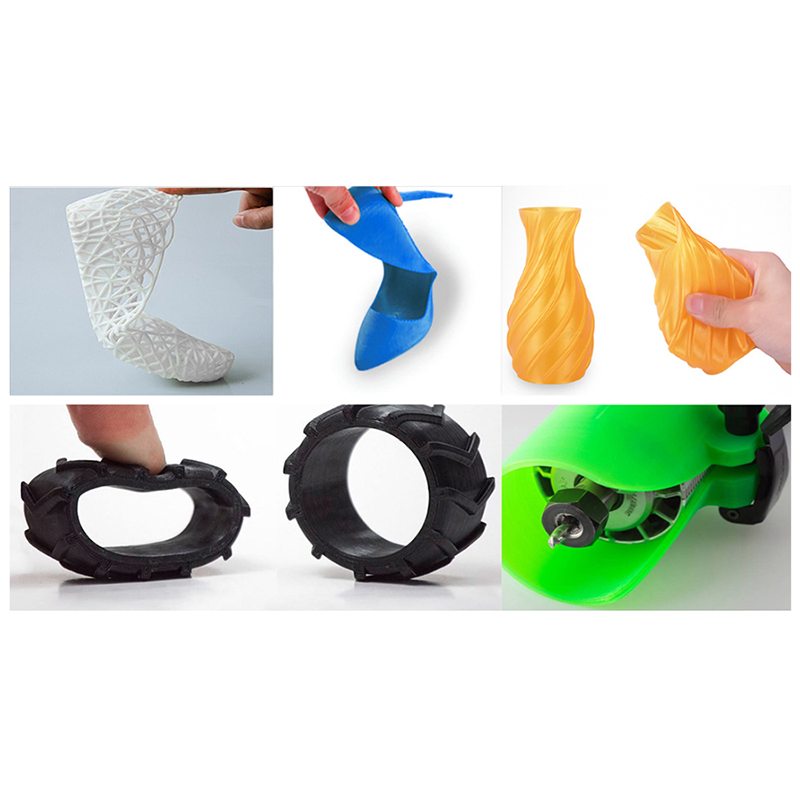
The state of the art in custom smartphone protection utilizes multi-material additive manufacturing. By combining flexible TPU (Thermoplastic Polyurethane) for the internal shock-absorbing liner and corner air cushions with a rigid Carbon Fiber composite exoskeleton for the perimeter spine and back armor, manufacturers produce a dual-density hybrid case. The internal TPU absorbs and dampens harmonic shock waves, while the external CF structure shields against sharp point-impacts and resists puncture hazards.
Engineering Best Practices: 3D Printing Carbon Fiber Phone Cases
Achieving flawless dimensional tolerances and mechanical performance when printing carbon fiber filaments requires proper machine configuration, thermal profiling, and slicer toolpath tuning. Review the essential guidelines below for enterprise production:
Abrasion-Resistant Tooling
Carbon fibers are highly abrasive to brass nozzles. Always deploy hardened steel, tungsten carbide, or ruby-tipped nozzles (minimum 0.4mm, recommended 0.6mm diameter) to prevent bore widening and ensure steady volumetric extrusion.
Optimized Slicer Infill Geometry
For smartphone protective shells, utilize Gyroid or 3D Honeycomb infill patterns at 35%-50% density. These isotropic geometries disperse multidirectional drop energy evenly compared to standard rectilinear grids.
Thermal & Moisture Control
Nylon and PETG carbon composites are hygroscopic. Maintain filament in dry boxes under 15% RH during printing. Dry material at 70°C-80°C for 6 hours prior to extrusion to eliminate micro-voids and maximize interlayer weld strength.
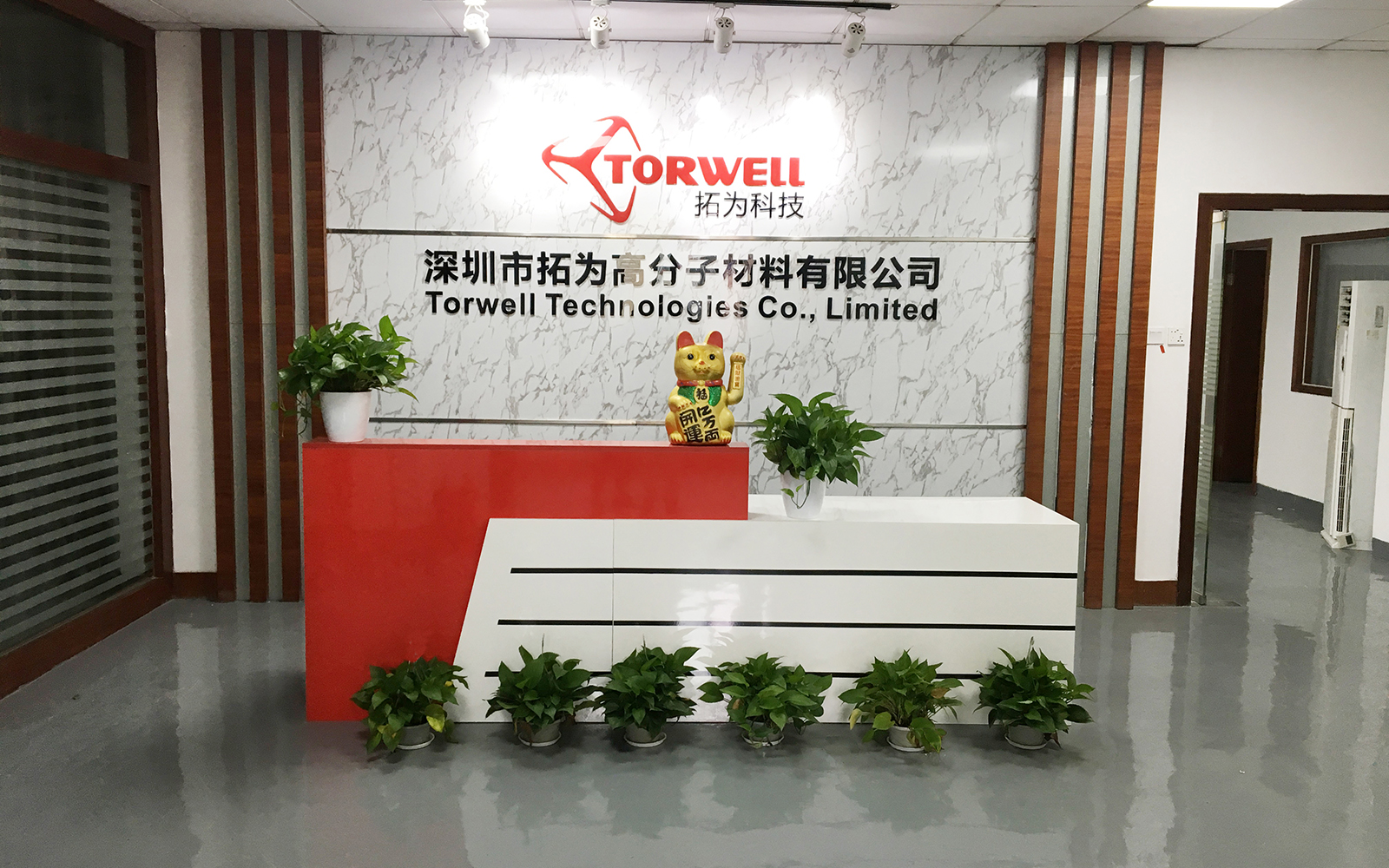
Torwell Technologies Co., Ltd.
Founded in 2011, Torwell Technologies Co., Ltd. is one of the earliest high-tech enterprises which specializing in high – tech 3D printer filaments research, manufacture and sell, occupies 2,500 square meters modern factory with production capacity of 50,000kgs per month.
With more than 10years experiences in 3D printing market exploration, cooperated with Institute for High Technology and New Materials in domestic famous universities, and engaging Polymer materials experts as technical adviser, Torwell becomes one of member of Chinese rapid prototyping association and leader enterprise with the most innovative products in 3D printing industry, owns independent intellectual property rights, patents and trademarks(Torwell US, Torwell EU, NovaMaker US, NovaMaker EU).
Torwell passed international quality management system ISO9001, international environment system ISO14001, the advanced manufacturing equipment, test devices and virgin raw materials available are introduced to produce and distribute 3D printer filament of unparalleled quality, to insure all the products of Torwell are compliant with RoHS standard, MSDS, Reach, TUV and SGS test certificated.
Be a reliable and professional 3D printing partner, Torwell has committed to expanding its products to America, Canada, UK, Germany, Netherlands, France, Spain, Sweden, Italy, Russia, Mexico, Australia, New Zealand, Brazil, Argentina, Japan, South Korea, Vietnam, Thailand, Malaysia, India, more than 80 countries and regions.
High-Performance 3D Printing Materials for Custom Protective Hardware
Discover our comprehensive collection of advanced composite, flexible TPU, high-strength PLA+, and aesthetic filaments for commercial phone case manufacturing.