Specialized Polymers for Ergonomic Tool Prototyping & End-Use Grips
Precision-extruded filaments developed for custom handle geometries, hand-conforming interfaces, and vibration-damped manual workstations.
1. The Industrial Ergonomics Crisis and Biomechanical Optimization
In modern manufacturing, aerospace assembly, precision electronics fabrication, and surgical environments, manual tool interaction remains an irreplaceable vector of dexterity and problem solving. However, standard off-the-shelf tool handles—traditionally molded from rigid polypropylene, hard ABS, or generic vulcanized rubber—enforce a destructive "one-size-fits-all" paradigm. This uniformity creates concentrated pressure points along the metacarpal arch, overtaxes flexor tendons, and transmits continuous high-frequency harmonic vibration straight into the hand-arm musculoskeletal system.
Occupational health data confirms that Cumulative Trauma Disorders (CTDs), such as Carpal Tunnel Syndrome, De Quervain's Tenosynovitis, and Vibration-Induced White Finger (Raynaud's phenomenon of occupational origin), account for over 32% of all non-fatal workplace lost-time incidents. Integrating flexible 3D printing materials for custom ergonomic tool grips represents a transformative paradigm shift: shifting the design approach from adapting human anatomy to a standardized tool toward algorithmically configuring tool handles around the individual operator's exact anthropometric geometry and workload vector.
Pressure Redistribution
Custom additive elastomeric profiles expand surface contact area by up to 340%, dissipating peak contact stress across the palm and thenar eminence to prevent localized ischemia and capillary compression.
Vibration Attenuation
Viscoelastic polymers like TPU (Shore 85A–95A) possess high mechanical loss factors (tan δ), absorbing vibrational frequencies (25 Hz–1200 Hz) emitted by pneumatic riveters and rotary grinding tools.
Individualized Grip Force
Anatomically conforming micro-contours eliminate parasitic grip tension, enabling operators to achieve equivalent torque transmission with 25% to 40% less manual clench exertion.
2. Material Science: Engineering Flexible Polymers for Ergonomic Applications
Selecting the ideal flexible 3D printing material requires an exacting evaluation of Shore hardness, elongation at break, tear strength, layer-to-layer adhesion dynamics, and chemical resilience. Unlike rigid thermoplastics (such as PLA or PETG) that yield abruptly under cyclic shear or crack under impact, elastomeric block copolymers combine hard crystalline segments that provide dimensional stability with soft amorphous domains that provide dynamic elasticity.
Thermoplastic Polyurethanes (TPU) are the gold standard for industrial tool grips. TPU combines high abrasion resistance, superior tear propagation resistance (essential for micro-textured tactile grips), and broad resistance to industrial cutting oils, grease, and human sweat. By tuning the ratio of polyols and diisocyanates, TPU grades span from ultra-cushioning Shore 75A formulations up to semi-rigid Shore 64D structural shells.
For surgical instruments requiring micro-tactile dexterity without spongy lag, Shore 95A–98A delivers exceptional positional feedback. For high-vibration heavy pneumatic assembly wrenches, a dual-durometer approach featuring an internal Shore 95A sleeve wrapped in a soft Shore 80A–85A cellular lattice dampens repetitive impacts without compromising tool alignment.
| Polymer Grade | Shore Hardness | Tensile Strength (MPa) | Elongation at Break (%) | Primary Grip Application Scenario |
|---|---|---|---|---|
| Ultra-Soft TPU / TPE | 70A – 80A | 18 – 25 | 650% – 850% | Medical rehabilitation grips, assistive eating aids, vibration isolation pads |
| Standard Flexible TPU | 85A – 90A | 30 – 38 | 500% – 600% | Automotive assembly torque wrenches, hand pliers, ergonomic utility knives |
| Industrial Shore 95A TPU | 95A | 40 – 48 | 400% – 500% | Heavy pneumatic tools, aerospace riveting guns, impact drills, torque bars |
| Semi-Rigid TPU / TPC | 55D – 64D | 45 – 55 | 250% – 350% | Load-bearing skeletons, surgical drill handles, high-torque positioning levers |
3. Comprehensive Industry Application Scenarios
How flexible additive manufacturing is solving mission-critical ergonomics across complex industrial sectors.
Automotive & Aerospace Assembly Lines
Fast-paced assembly plants demand repetitive fastener torqueing over 8-hour shifts. Operators handling pneumatic screwdrivers, nut runners, and bucking bars frequently suffer from acute vibration fatigue. Flexible 3D printed TPU sleeves, tailored via 3D scanning to individual technician hands, absorb low-frequency shocks while providing built-in cable conduits and tool balancer attachments.
Surgical & Laparoscopic Medical Instrumentation
During multi-hour microsurgical or endoscopic interventions, surgeon hand fatigue directly correlates with hand tremor and reduced tactile feedback. Additively manufactured autoclavable flexible grips allow surgical teams to design custom ergonomic palm rests, index finger stabilization fins, and non-slip knurled surfaces that conform specifically to the lead surgeon's grip mechanics.
Electronics Manufacturing & Cleanroom Assembly
Precision tweezers, wire cutters, and soldering irons require delicate tactile control without electrostatic discharge (ESD) risks. Semi-conductive flexible TPU filaments engineered with carbon nanotube or carbon black additives allow plants to print custom dissipative tool grips that eliminate static accumulation while providing soft, non-marring contact with fragile components.
Occupational Rehabilitation & Assistive Devices
Workers recovering from hand trauma, arthritis, or stroke often struggle to return to active manufacturing jobs due to compromised grip strength. Digital scanning allows physical therapists and manufacturing engineers to co-design bespoke adaptive grips that distribute force across functional phalanges, enabling modified tool operation without aggravating healing tissues.
4. Additive Engineering Strategies: Beyond Simple Solid Printing
The true competitive advantage of flexible 3D printing materials lies in the freedom to design complex internal geometries that cannot be manufactured through traditional injection molding or subtractive machining. By varying internal volumetric infill patterns, wall loop counts, and void spaces, designers can program non-linear mechanical compliance directly into the grip structure.
Triply Periodic Minimal Surfaces (TPMS) and Gyroid Lattices
Rather than printing dense, solid rubber that adds unnecessary weight and lacks cushioning depth, advanced tool grips employ TPMS internal structures such as Gyroid, Schwarz Diamond, or Neovius lattices. When printed in Shore 95A TPU, a 25% density Gyroid core behaves like a progressive spring: it is ultra-pliant under light finger contact for tactile comfort, yet stiffens rapidly under heavy torque loads to maintain rigid tool control. Furthermore, open-cell gyroid structures facilitate internal airflow, reducing hand sweat accumulation during extended use.
Multi-Material Co-Extrusion & Interlocking Interfaces
High-performance tools frequently combine a rigid structural skeleton (printed in tough PLA+ or carbon fiber-reinforced PETG) with an elastomeric TPU outer skin. Achieving robust polymer-to-polymer bonding between dissimilar materials is critical. Engineers utilize dovetail mechanical interlocks, perforated core geometry, and precise thermal extrusion tuning to achieve chemical and physical fusion at the interface, completely eliminating delamination under high torsional stress.
Directly 3D printing micro-features—such as 0.6mm directional herringbone channels, micro-pyramid arrays, or negative-pressure dimples—allows fluid and industrial oils to wick away from the palm interface, boosting the static coefficient of friction by over 65% in wet environments compared to smooth molded rubber.
5. Commercial Viability, Cost-Benefit Analysis, and Industry 4.0 Outlook
From a financial perspective, investing in customized flexible tool grips delivers immediate returns. Traditional dual-shot injection molding requires tooling investments ranging from $15,000 to $60,000 per mold design, with lead times of 8 to 16 weeks. This capital barrier effectively prohibits worker-specific personalization or small-batch custom tooling.
With on-demand additive manufacturing utilizing industrial-grade TPU filament, lead times collapse to less than 4 hours from digital hand scan to final finished tool assembly, at an incremental material cost of just $2.50 to $8.00 per grip. Furthermore, the operational return on investment (ROI) is amplified through:
- Significant Reduction in Lost-Time Injury Claims: Ergonomically optimized tools mitigate worker fatigue and chronic strain claims by up to 45%.
- 18–28% Increase in Daily Assembly Throughput: Reduced hand fatigue allows operators to maintain high assembly speed and fastener accuracy toward the end of long work shifts.
- Instant Iteration and Design Refinement: Feedback from line workers can be integrated into CAD models and reprinted overnight, realizing true continuous improvement (Kaizen) on the factory floor.
The Horizon: Generative AI and Smart Sensor Grips
The convergence of Generative Design AI, photogrammetric computer vision, and conductive flexible filaments points to the next generation of industrial tool interfaces. Future workflows will utilize real-time smartphone video scans of an operator's hand to auto-generate FEA-optimized, lattice-damped grip geometries within minutes. Concurrently, embedded conductive elastomeric traces inside the grip will monitor grip force, tool orientation, and operator heart rate in real time, alerting safety managers to operator exhaustion before accidents happen.
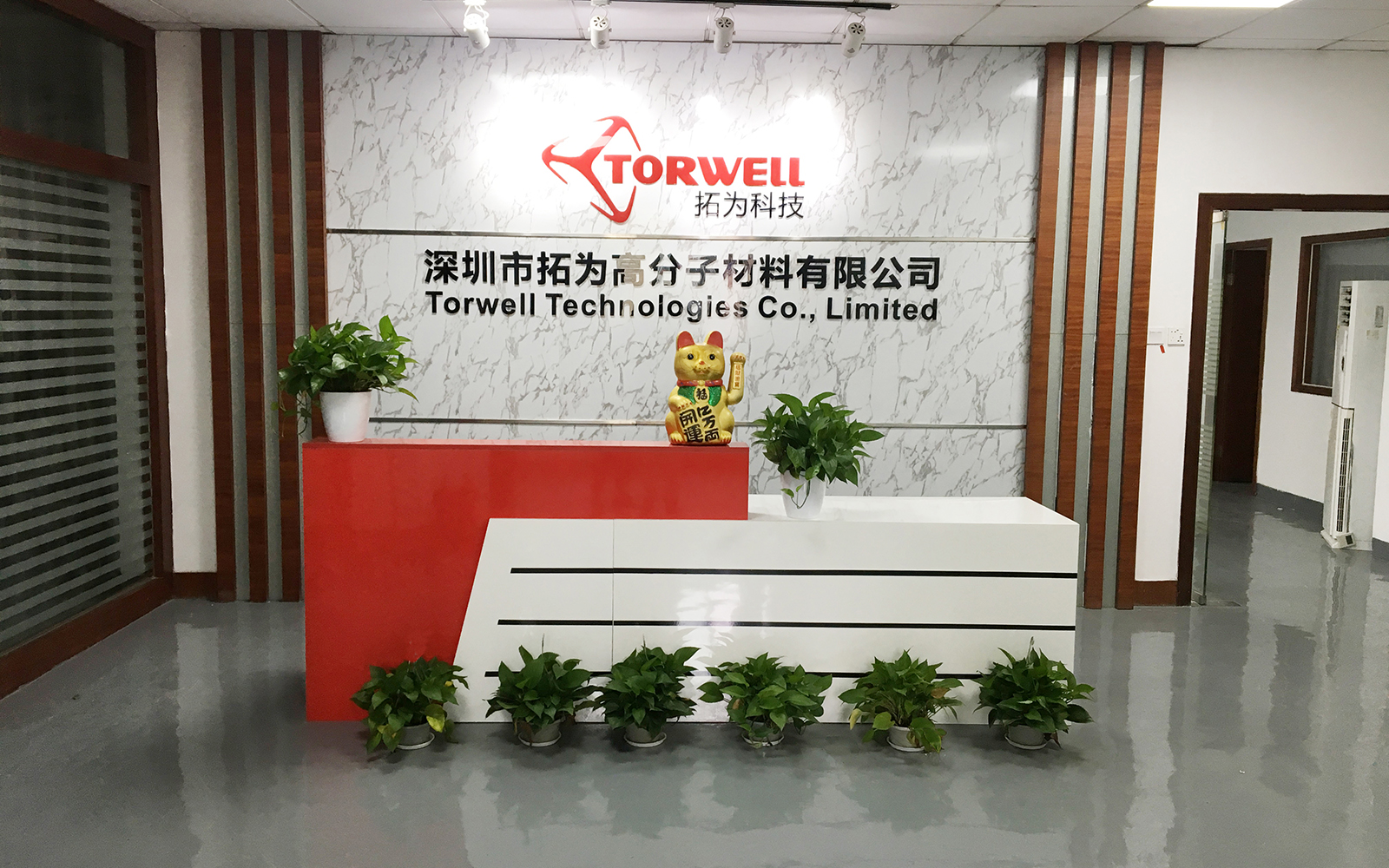
Torwell Technologies Co., Ltd.
Founded in 2011, Torwell Technologies Co., Ltd. is one of the earliest high-tech enterprises specializing in high-tech 3D printer filaments research, manufacture, and distribution. Operating a 2,500 square meters modern factory with an automated production capacity of 50,000 kgs per month.
With more than 10 years of experience in 3D printing polymer exploration, in cooperation with Institutes for High Technology and New Materials across renowned universities, Torwell engages leading polymer materials experts as technical advisors. Torwell is a proud member of the Chinese Rapid Prototyping Association, holding proprietary intellectual property rights, international patents, and registered trademarks (Torwell US, Torwell EU, NovaMaker US, NovaMaker EU).
Certified under international quality management ISO9001 and environmental management ISO14001, Torwell utilizes virgin raw materials, laser measurement diameter control (±0.02mm), and rigorous testing devices to ensure full compliance with RoHS, MSDS, REACH, TUV, and SGS standards, serving partners across more than 80 countries.
Complete Engineering Filament Portfolio for Industrial Tooling
Browse our full lineup of flexible, reinforced, and functional 3D printing materials engineered for prototyping and end-use manufacturing fixtures.