Precision Damping & Structural 3D Printing Materials
Explore our specialized polymer filaments engineered for extreme durability, mechanical damping, and tight-tolerance additive manufacturing.
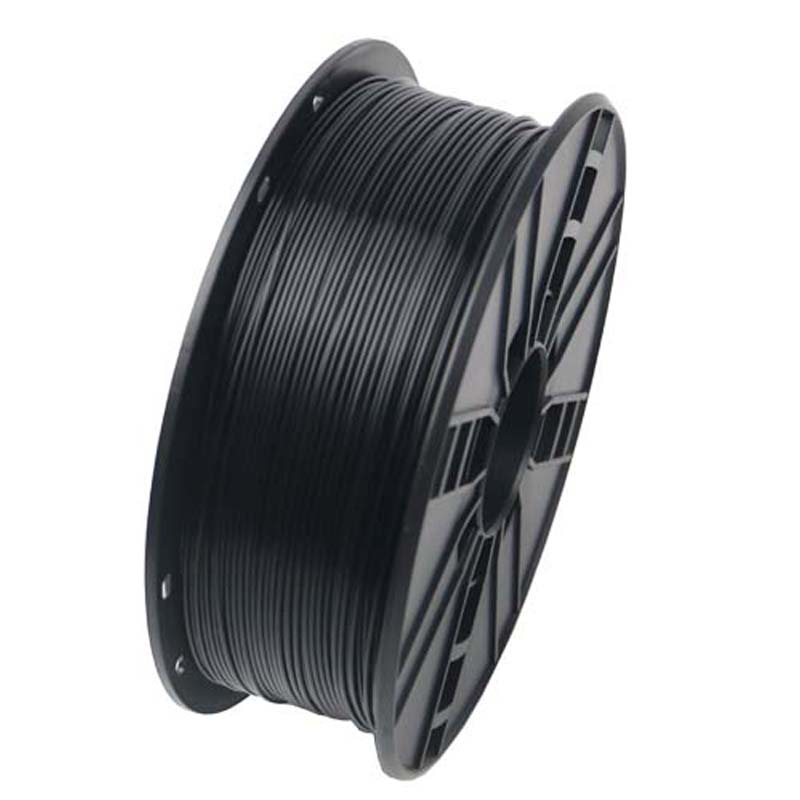
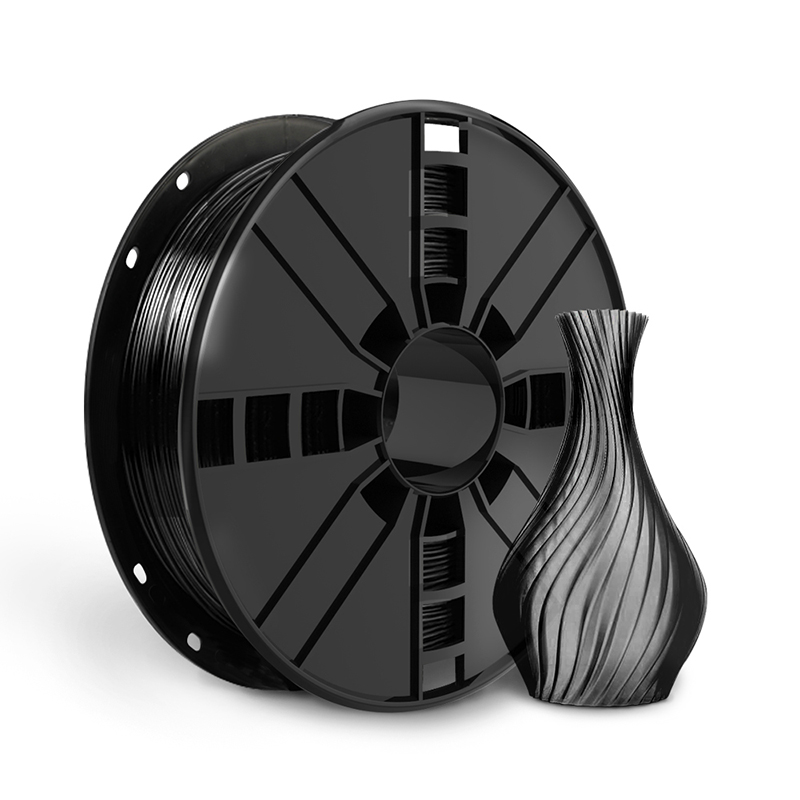
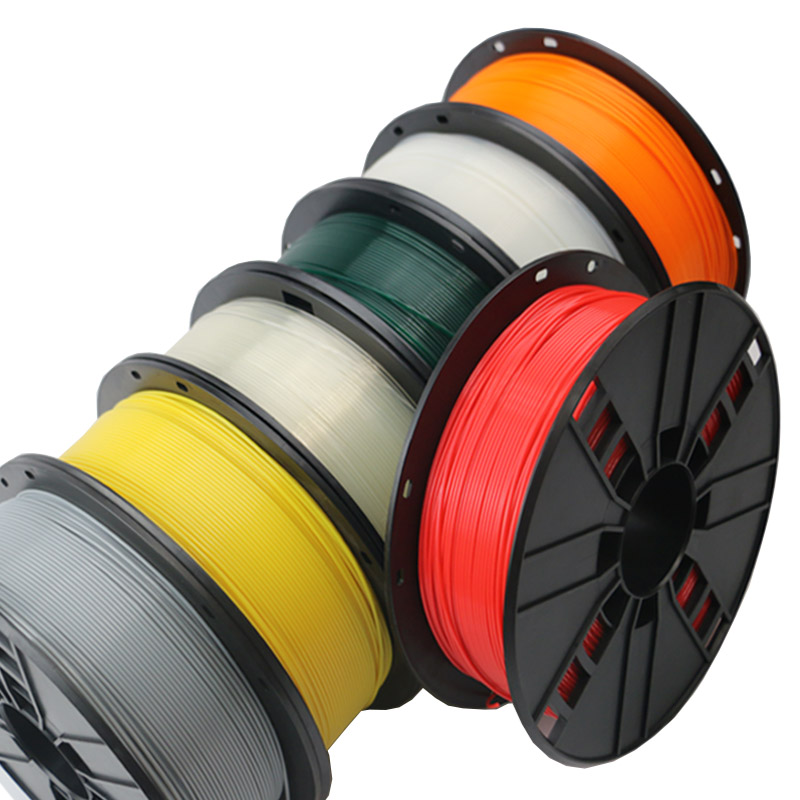
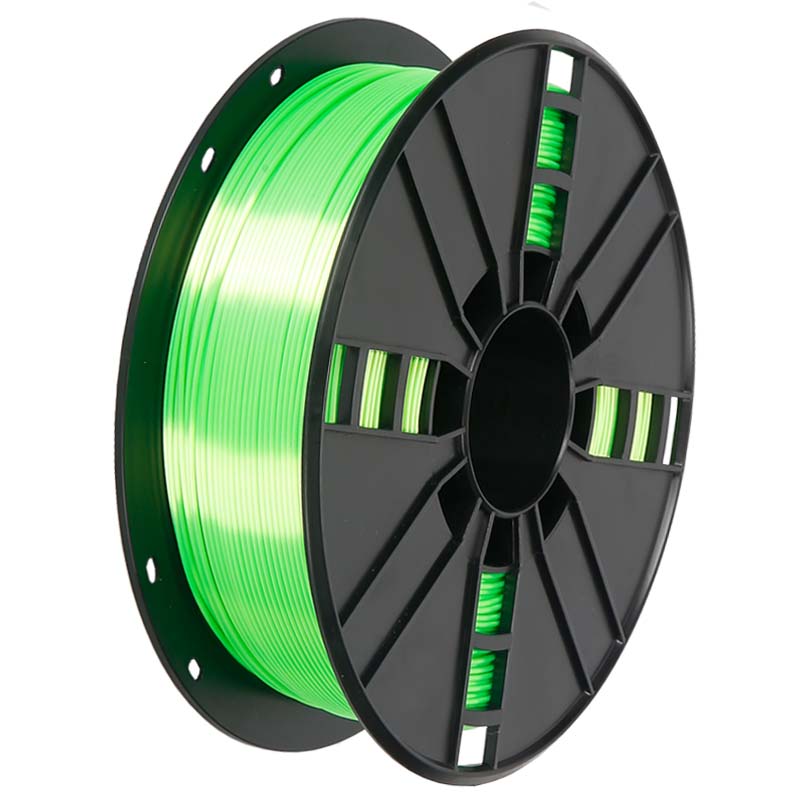
The Commercial Landscape of Additive Vibration Mitigation
Transitioning from conventional isotropic elastomeric dampers to anisotropic, fiber-reinforced additive manufacturing structures.
Industrial Market Transformation in NVH Engineering
In modern mechanical systems, noise, vibration, and harshness (NVH) management represents a critical engineering bottleneck. Unchecked mechanical resonance degrades manufacturing tolerances in computer numerical control (CNC) systems, causes optical jitter in airborne sensor gimbals, accelerates fatigue failures in industrial robotics, and increases acoustic fatigue in electrified vehicle powertrains. Historically, mechanical engineers were constrained to isotropic vulcanized elastomers, hydraulic dampers, or spring-loaded isolators. While effective across narrow frequency bands, traditional isolation hardware introduces substantial mass penalties, lacks geometric configurability, and suffers from chemical degradation in harsh oily environments.
The rapid industrialization of carbon fiber reinforced 3D printing materials—incorporating short carbon fibers (SCFs) and continuous carbon fiber filaments within high-performance thermoplastic matrices (such as PA12, PETG, ABS, and PEEK)—has disrupted the damping hardware market. The global market for additive manufacturing in vibration-dampening components is experiencing exponential growth, driven by the demand for customized modal tuning, mass reduction, and accelerated design iteration cycles without prohibitive injection molding tooling costs.
Unlike solid metal mounts that bounce vibrational energy back into the kinematic chain, 3D printed carbon fiber composites combine internal friction dissipation with architected metamaterials (e.g., gyroid and Schwarz diamond triply periodic minimal surfaces) to shift natural resonant frequencies away from critical excitation bands.
Interfacial Shear Dissipation
Microscopic mechanical energy is converted into low-grade thermal energy along the high-surface-area interface between the carbon fiber whiskers and the viscoelastic polymer matrix.
Anisotropic Stiffness Tailoring
Fused Filament Fabrication (FFF) aligns micro carbon fibers along toolpath vectors, allowing engineers to decouple axial load-bearing stiffness from lateral shear compliance.
Broadband Harmonic Isolation
By integrating variable density cellular infills, additive dampers simultaneously suppress high-frequency structural acoustic noise and low-frequency mechanical shock impulses.
Deep-Dive Industrial Application Scenarios
Examining real-world deployments of carbon fiber 3D printed vibration isolation mounts across critical industries.
1. High-Speed Optical Inspection & Metrology Gantries
Challenge: Ultra-fast linear motor accelerations create residual structural vibrations on automated optical inspection (AOI) bridges, causing motion blur and measurement settling delays exceeding 150 milliseconds.
Solution: Custom carbon fiber reinforced PETG/PA mounts printed with internal Triply Periodic Minimal Surface (TPMS) gyroid cores. The anisotropic carbon orientation dampens high-frequency harmonic flutter within 18 milliseconds, enabling a 22% increase in panel inspection throughput.
2. Aerospace UAV Sensor Gimbal Shock Isolation
Challenge: Rotor blade pass frequencies (BPF) and aerodynamic buffeting transmit broad-band vibrational energy to LiDAR and multispectral cameras, inducing pixel jitter and gyro drift.
Solution: Direct printing of lightweight, unibody carbon fiber dampening brackets with integrated flexure hinges. The composite structure maintains structural rigidity under 6G flight maneuvers while filtering out 120-400Hz rotor vibrations, cutting payload weight by 52% compared to CNC aluminum assemblies.
3. Collaborative Robotics (Cobot) End-Effector Dampers
Challenge: Pneumatic grippers and ultrasonic welding end-effectors transmit sharp shock waves back into robotic joint cycloidal gearboxes, inducing premature backlash wear.
Solution: Additively manufactured carbon-infused isolators positioned between the wrist flange and tooling. The high loss tangent ($\tan \delta$) of the composite absorbs transient impact shocks, protecting delicate torque-sensor arrays and doubling cycloidal gearbox service intervals.
4. Industrial Vacuum Pumps & Fluid Handling Mounts
Challenge: Reciprocating positive displacement pumps transmit continuous 50-60Hz ground-borne vibrations into precision manufacturing cleanroom floors.
Solution: Heavy-duty, chemical-resistant carbon fiber ASA isolation blocks engineered with gradient density lattice structures. The mounts resist aggressive cleaning solvents, lubricants, and continuous compression without creep relaxation or resonance amplification.
Design for Additive Manufacturing (DfAM) for Damping Mounts
Mastering the interplay between fiber loading fractions, polymer viscosity, and lattice topology optimization.
Microstructural Mechanics of Carbon Fiber Filled Polymers
When short carbon fibers (typically 100-300 microns in length with aspect ratios exceeding 15:1) are compounded into engineering polymers at optimal weight fractions (15% to 25%), they fundamentally alter the material's dynamic mechanical response. In pure polymers, vibration energy is dissipated purely via the relaxation of macromolecular polymer chains. However, this viscoelastic damping is strongly temperature-dependent.
In carbon fiber reinforced composites, damping occurs via three synergistic mechanisms:
1. Viscoelastic Matrix Dissipation: The bulk polymer matrix (such as engineered PETG, ASA, or Polyamide) absorbs shear deformation under oscillatory mechanical loads.
2. Fiber-Matrix Interfacial Friction: Micro-scale slip-stick mechanics at the fiber interface dissipate dynamic strain energy as infinitesimal heat flux without causing structural plastic deformation.
3. Acoustic Scattering at Phase Boundaries: High-frequency sound waves and vibrational stress waves undergo multiple reflections and refractive scattering when encountering randomly dispersed micro-fibers, drastically attenuating transmission amplitude across the component.
By leveraging modern slicing algorithms, toolpaths can be programmed to orient fibers concentrically around bolt holes for maximum compressive load capacity, while employing stochastic or gyroid infills in the core to maximize vibrational shear dissipation. This multi-density capability is fundamentally impossible with subtractive machining or injection molding.
Torwell Production Rigor & Quality Control Protocols
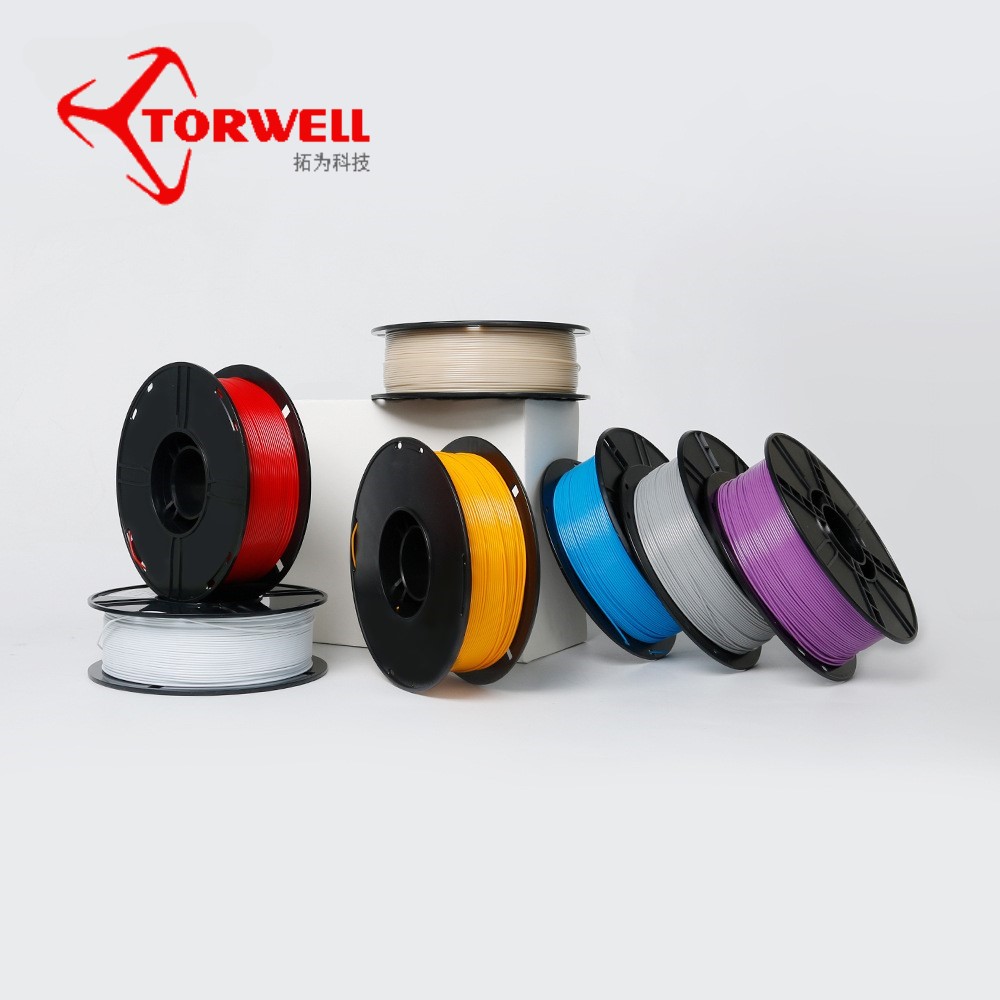
Industrial-grade 3D printing filaments manufactured under strict ISO45001 standards with tight diameter tolerances for reliable industrial dampening mount production.
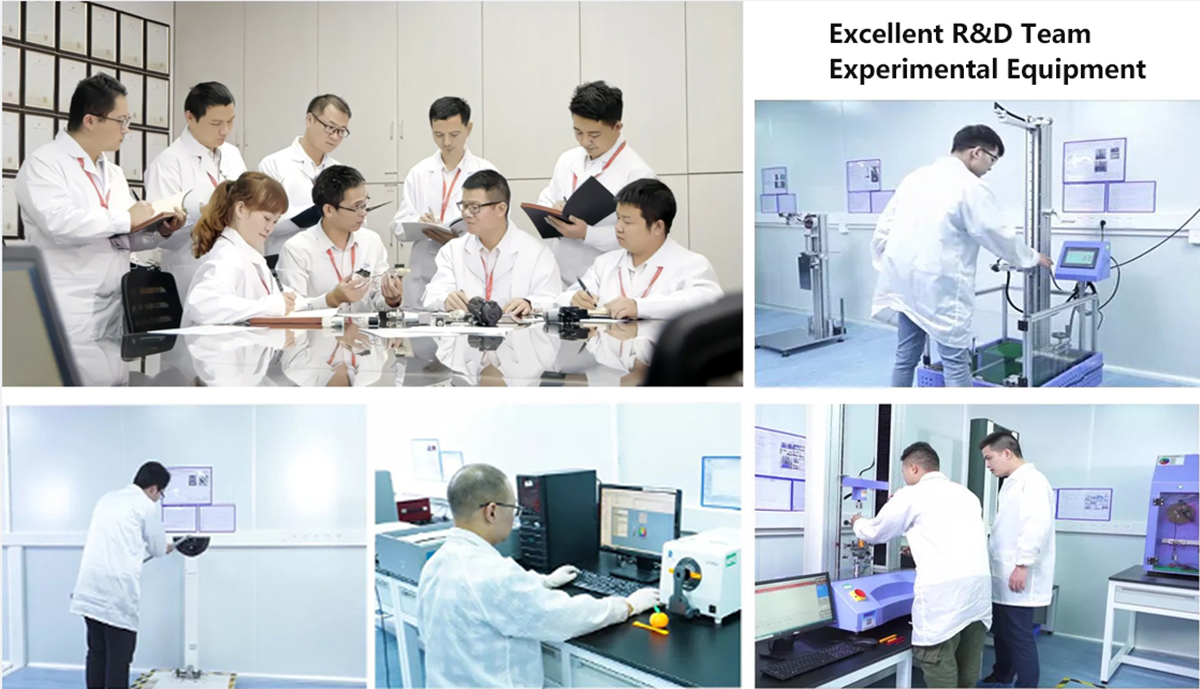
Quality Control
The factory area has passed ISO45001 occupational health and safety management system certification. Every new employee must be experienced one week of safety production knowledge teaching and two weeks of produce skills training, and master every course in the production process. Who is in the position will be responsible for its duty.
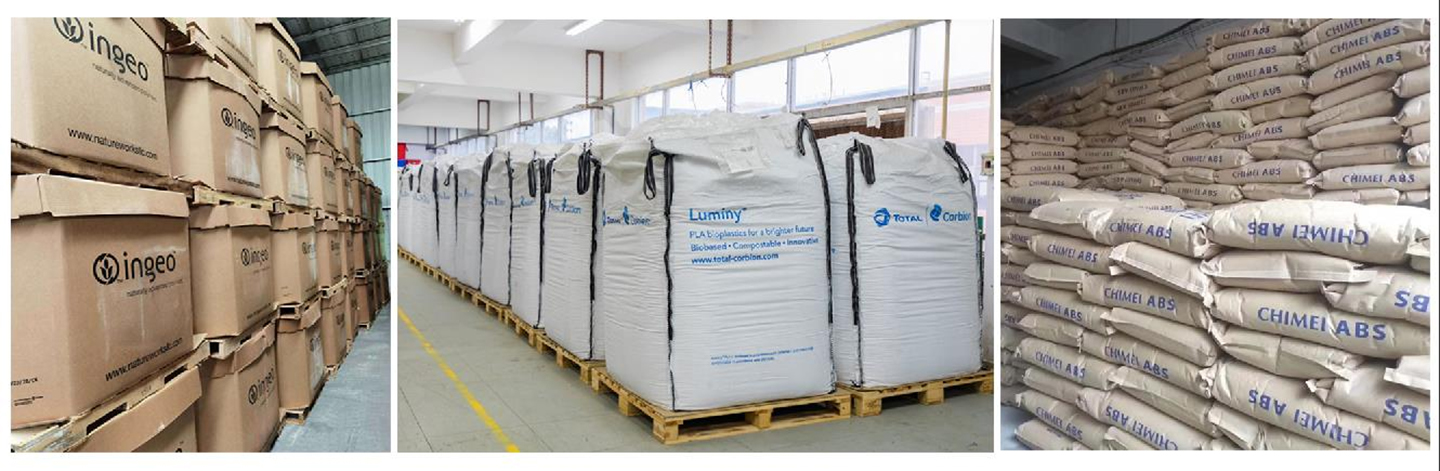
Raw Material
PLA is the most preferred material for 3D printing, Torwell firstly chooses PLA from US NatureWorks, and Total-Corbion is the alternative. ABS from TaiWan ChiMei, PETG from South Korea SK. Each batch of main raw materials comes from the partners who has cooperated more than 5 years to ensure the reliability of the products from the source. Each batch of raw materials will undergo parameters inspection before produce to ensure that raw materials are original and virginal.
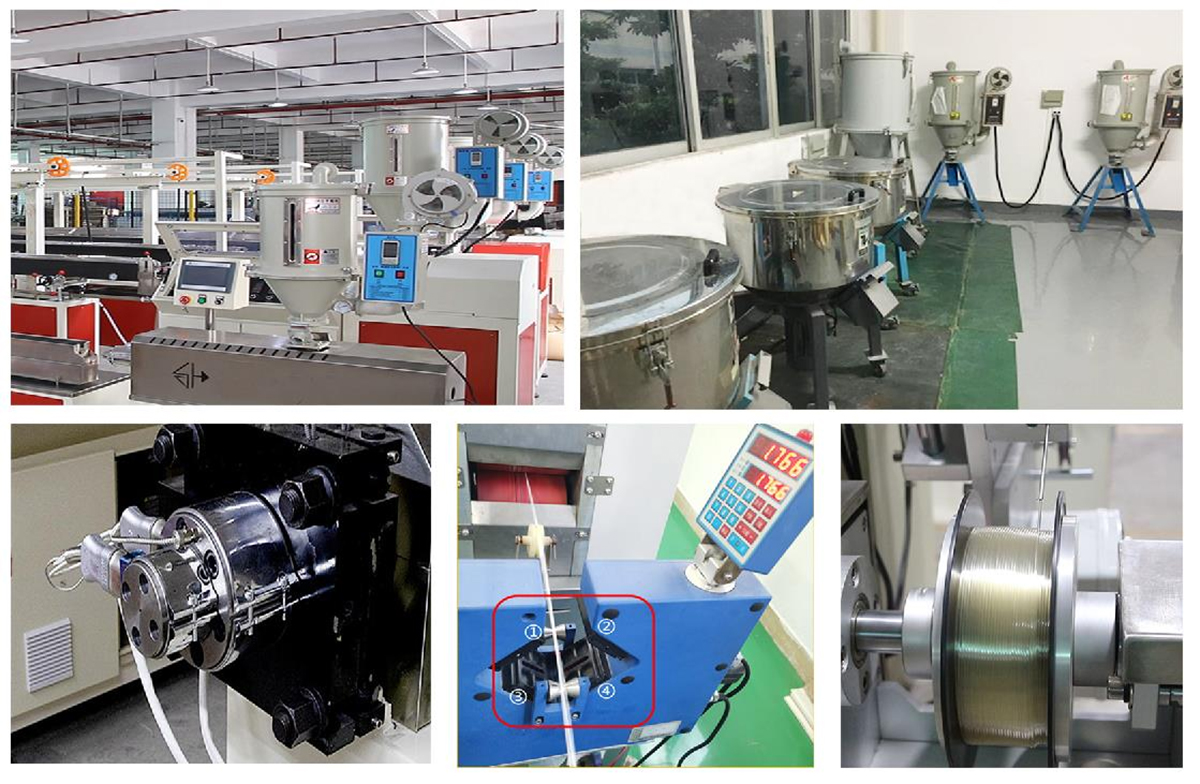
Equipment
The manufacturing workshop will make arrangements after the inspection of raw materials, at least two engineers cross-check the clearance of mixing tank, color mixed of material, humidity from hopper dryer, temperature of extruder, hot/cool tank, and trial-produce and debugging the produce line to make sure all of processes in the best condition. Maintain the filament Diameter tolerance +/- 0.02mm, Roundness tolerance +/- 0.02mm.
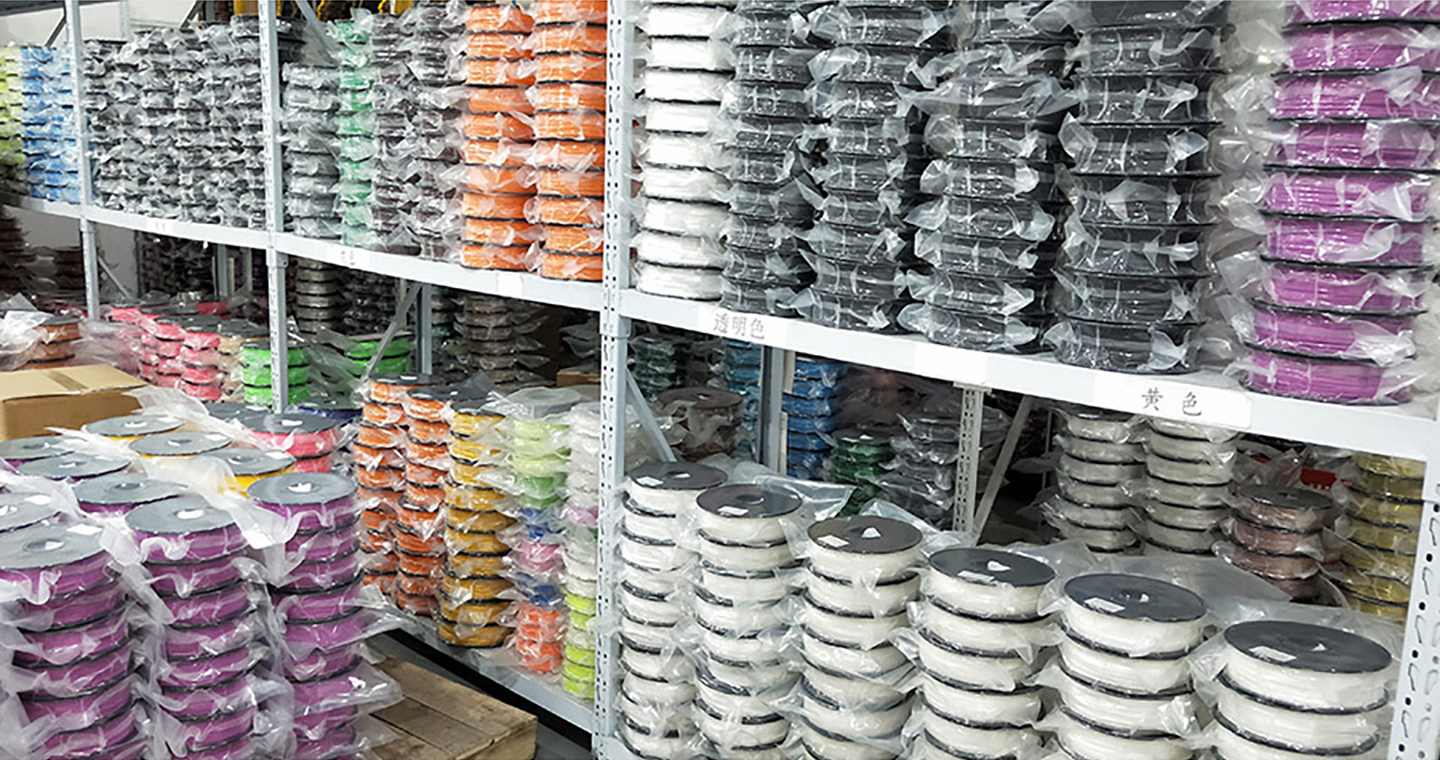
Final Inspection
After each batch of 3D filament is produced, two quality inspectors will conduct random inspections on each batch of finished products in accordance with the requirements of the standard, such as diameter tolerance, color consistency, strength and toughness and so on. After vacuuming the package, place them for 24 hours to check whether there is any leaking package, then label it and finish the package.
Emerging Trends in High-Performance Damping Filaments
Next-generation developments driving the convergence of smart composite materials and active vibration suppression.
Carbon Nanotube (CNT) Hybridization
Integrating multi-walled carbon nanotubes with chopped carbon fibers creates multi-scale hierarchical reinforcement networks. This bridges nano-scale strain cracks and delivers enhanced electrical conductivity for ESD-sensitive mountings.
Thermally Conductive Dampers
Modern EV inverters and high-power servomotors require simultaneous thermal dissipation and vibration isolation. Graphene and pitch-based carbon fiber filaments offer dual thermal-mechanical pathways to route heat away from delicate bearings.
AI-Driven Generative Infill Design
Engineers are now deploying finite element analysis (FEA) coupled with genetic algorithms to generate non-uniform, load-specific lattice topologies that maximize vibration attenuation at specific motor RPM resonance nodes.
Industrial Grade 3D Printing Materials & Formulations
Explore Torwell's complete catalog of precision-extruded materials for functional prototypes, high-strength industrial fixtures, and vibration dampening mounts.