High-Performance Robotic Materials & Precision Filaments
Engineered for structural brackets, end-of-arm tooling (EOAT), modular articulated joints, and high-frequency dynamic motion assemblies.
1. Industrial Evolution: Carbon Fiber Additive Manufacturing in Robotics
In modern automated manufacturing, multi-axis industrial articulated robots, delta pick-and-place manipulators, and collaborative robots (cobots) operate under extreme dynamic constraints. Every gram of excess mass located at the end-of-arm tooling (EOAT) or along distal linkage segments translates exponentially into mechanical rotational inertia. According to the physical law of moment of inertia, \(I = m \cdot r^2\), mass located further away from the actuator axis dictates motor sizing, cycle acceleration rates, settling oscillation damping times, and overall operational power consumption.
Traditionally, robotics manufacturers relied heavily on CNC-machined aerospace-grade aluminum (e.g., Al 6061-T6 or Al 7075), magnesium alloys, or hollow structural steel weldments. While these metals provide sufficient structural stiffness, their high density limits high-speed trajectory responsiveness, creates significant shock-load risks during unexpected collisions, and incurs prohibitive CNC machining costs and lead times when complex internal pneumatic routing or topology optimization is required. Carbon fiber reinforced 3D printing materials (such as short-chopped carbon fiber blended with Polyamide, PETG, ABS, or high-temperature PEEK/PEKK matrices) have established a transformative paradigm in industrial robotics design.
Drastic Inertia Reduction
Replacing aluminum arm segments with carbon fiber composites yields up to 45% to 65% weight savings, reducing distal kinetic energy, motor thermal stress, and cycle settling latency.
High Specific Modulus
High-strength chopped carbon fibers oriented along toolpaths deliver phenomenal flexural rigidity, minimizing dynamic deflection and positional jitter during high-G deceleration.
Geometric Topology Freedom
Additive manufacturing enables organic, generative-designed internal lattice cores (gyroid, octet) and integrated vacuum/air channels unattainable via subtractive CNC methods.
2. Technical Material Engineering: Polymer Matrices & Fiber Reinforcement
To evaluate the optimal carbon fiber 3D printing filament for robotic arm components, engineers must examine the synergy between the base thermoplastic polymer and the reinforcement micro-fibers. Chopped carbon fibers typically range from 100 to 300 microns in length, distributed uniformly within the matrix at loadings between 15% and 30% by weight. When extruded through an abrasive-resistant nozzle (e.g., hardened steel or polycrystalline diamond), the fibers align predominantly parallel to the deposition vectors, creating an anisotropic reinforcement structure with exceptional longitudinal tensile strength.
| Material Classification | Tensile Strength (MPa) | Flexural Modulus (GPa) | HDT @ 0.45 MPa (°C) | Optimal Robotic Component Application |
|---|---|---|---|---|
| PA12-CF (Nylon 12 Carbon Fiber) | 105 – 125 | 7.5 – 9.2 | 145 – 165 | High-impact robotic joint brackets, kinematic linkages, EOAT fingers |
| PETG-CF (Polyethylene Composite) | 75 – 90 | 5.2 – 6.8 | 80 – 92 | Moisture-resistant sensor brackets, dynamic cable guide tracks, light grippers |
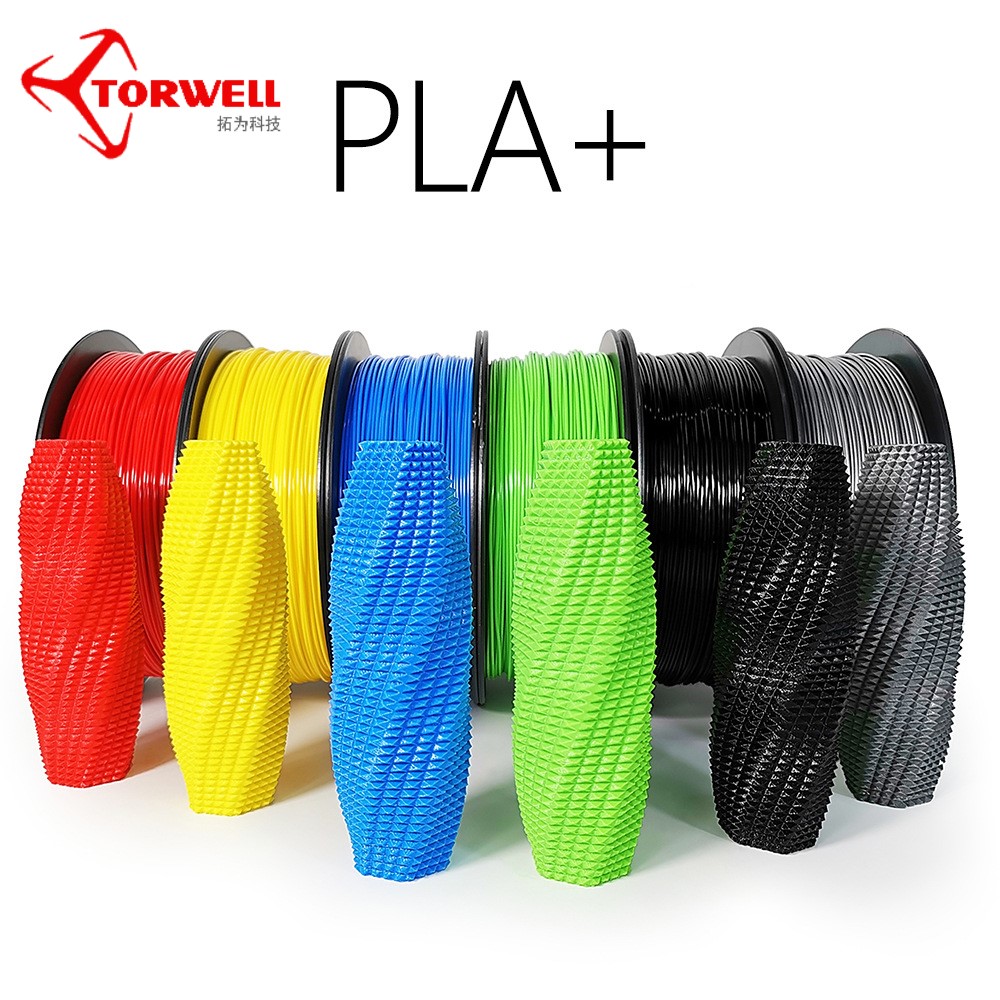
| PLA+ / Toughened PLA Alloys | 60 – 72 | 3.8 – 4.5 | 58 – 65 | Rapid concept prototyping, ergonomic teach-pendant housings, dust covers |
| PEEK-CF (Ultra-Polymer Composite) | 160 – 195 | 11.0 – 14.5 | 260 – 290 | Aerospace manipulators, vacuum cleanroom semiconductor robotic arms |
Engineering Note: Layer Adhesion & Micro-Void Minimization
Carbon fiber additions significantly lower the Coefficient of Thermal Expansion (CTE) of virgin polymers like Nylon and PETG. This eliminates warping, reduces volumetric shrinkage to under 0.2%, and ensures that multi-part robotic arm segment assemblies maintain aerospace tolerances (±0.05mm) across large build envelopes.
3. Deep-Dive Industrial Application Scenarios in Modern Automation
Lightweight carbon fiber additive composites are revolutionizing specialized robotics sectors where traditional metallic milling proves too heavy, slow, or unadaptable:
A. Collaborative Robot (Cobot) End-Of-Arm Tooling (EOAT) & Custom Grippers
In collaborative workstations where humans share workspaces with cobots, strict ISO/TS 15066 safety regulations dictate maximum dynamic payload momentum and power-and-force limiting thresholds. By fabricating custom end-effectors, vacuum suction manifolds, and pneumatic clamping fingers out of carbon fiber reinforced 3D printed composites, engineers reduce the unladen tooling weight by up to 70%. This directly preserves the cobot's rated payload capacity for the actual manufactured part, rather than consuming the payload rating just holding a heavy metal gripper.
B. High-Speed Delta Robots & High-Frequency Pick-and-Place Gantry Arms
Delta robots operating in food packaging, pharmaceutical inspection, and electronic component insertion execute up to 150 to 200 picks per minute, experiencing acceleration forces exceeding 15G. Metallic delta parallel linkages subject universal ball joints and servo reducers to severe cyclical fatigue. 3D printed carbon-fiber parallel rods with topology-optimized internal gyroid infill deliver superior vibration damping. The internal viscoelastic polymer matrix absorbs high-frequency deceleration shock waves, eliminating micro-jitter at the vacuum suction cup and guaranteeing micron-level placement repeatability.
C. Medical Surgical Robotics & Radiotranslucent Manipulators
In robotic-assisted orthopedic and neurological surgery, robotic arms must operate within active intraoperative X-ray and CT fluoroscopy fields. Traditional aluminum or titanium arm components create heavy radiopaque artifacts that obscure surgical visibility. Carbon fiber polymer composite structures are intrinsically radiotranslucent, allowing surgeons unobstructed real-time imaging while providing the high rigidity necessary for sub-millimeter surgical tool guidance.
D. Autonomous Mobile Manipulators (AMRs) & Quadruped Robotic Limbs
Battery-powered mobile robots carrying articulated arms face a strict energy budget. Every extra kilogram of arm mass drains onboard lithium battery reserves rapidly. Lightweight 3D printed carbon fiber linkages extend field runtime by 25% to 40%, reduce the center of gravity height to prevent AMR tipping during rapid cornering, and withstand severe outdoor environmental impacts.
4. Commercial Market Dynamics & Future Technological Horizons
The global market for additive manufacturing composites in robotics is projected to expand at a CAGR exceeding 22.4% over the next decade. This rapid acceleration is fueled by three critical technological breakthroughs:
AI-Driven Slicing & Stress Vector Alignment
Modern slicing engines utilize finite element analysis (FEA) data to dynamically steer extrusion nozzle vectors along principal stress trajectories, aligning chopped fibers directly against shear and bending forces.
Embedded Sensor Integration
Additive processes permit mid-print embedding of fiber-optic strain gauges, piezoelectric vibration sensors, and shielded wiring directly inside the robotic arm structural shell without external brackets.
Closed-Loop Circular Composites
Advanced recycling and mechanical re-compounding technologies allow retired robotic arm brackets to be reground, re-extruded into high-performance filament spools, and reprinted with minimal tensile degradation.
5. Enterprise Manufacturing Excellence & Global Supply Capabilities
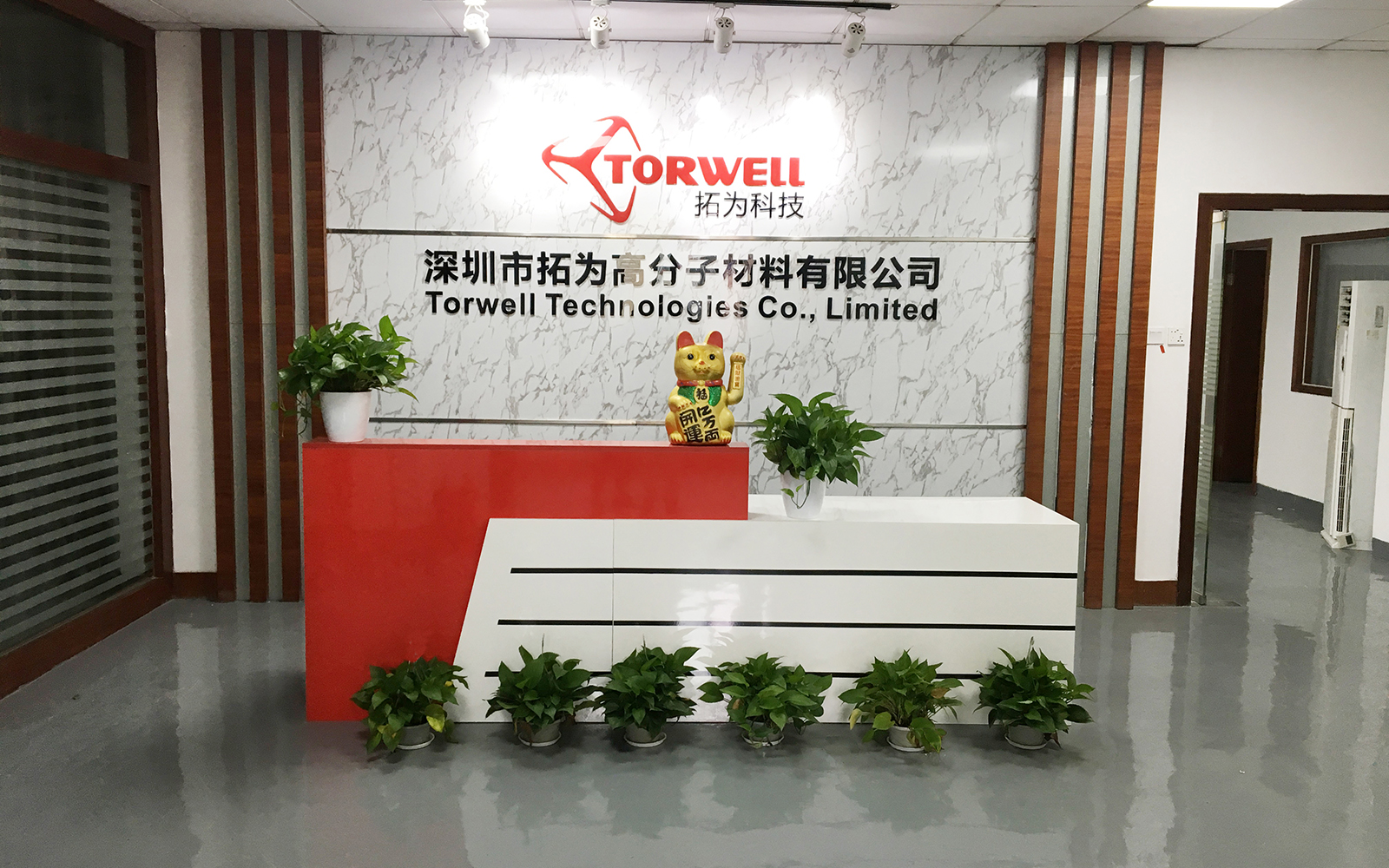
Company Profile
Founded in 2011, Torwell Technologies Co., Ltd. is one of the earliest high-tech enterprises which specializing in high-tech 3D printer filaments research, manufacture and sell, occupies 2,500 square meters modern factory with production capacity of 50,000kgs per month.
With more than 10years experiences in 3D printing market exploration, cooperated with Institute for High Technology and New Materials in domestic famous universities, and engaging Polymer materials experts as technical adviser, Torwell becomes one of member of Chinese rapid prototyping association and leader enterprise with the most innovative products in 3D printing industry, owns independent intellectual property rights, patents and trademarks(Torwell US, Torwell EU, NovaMaker US, NovaMaker EU).
Torwell passed international quality management system ISO9001, international environment system ISO14001, the advanced manufacturing equipment, test devices and virgin raw materials available are introduced to produce and distribute 3D printer filament of unparalleled quality, to insure all the products of Torwell are compliant with RoHS standard, MSDS, Reach, TUV and SGS test certificated.
Be a reliable and professional 3D printing partner, Torwell has committed to expanding its products to America, Canada, UK, Germany, Netherlands, France, Spain, Sweden, Italy, Russia, Mexico, Australia, New Zealand, Brazil, Argentina, Japan, South Korea, Vietnam, Thailand, Malaysia, India, more than 80 countries and regions.
Explore Complete Engineering & High-Performance Material Portfolio
Torwell offers an exhaustive range of high-performance polymer filaments, engineered composites, and precision aesthetic materials optimized for continuous additive manufacturing in robotic research, rapid prototyping, and high-volume industrial deployment.