Featured Engineering & High-Precision Filaments
Premium additive filaments engineered for exact tolerances, aesthetic excellence, and high mechanical reliability across industrial and prototyping sectors in Türkiye.
The Rise of Carbon Fiber (CF) 3D Printing Materials in Türkiye
Over the past decade, the Republic of Türkiye has established itself as one of the world's most dynamic manufacturing and industrial innovation hubs. Straddling Europe, the Middle East, and Central Asia, the nation has witnessed a profound transformation driven by its ambitious "National Technology Move" (Milli Teknoloji Hamlesi). Within this evolving landscape, additive manufacturing—specifically the utilization of Carbon Fiber (CF) reinforced composite filaments—has emerged as a foundational technology for industrial autonomy, rapid functional prototyping, and lightweight structural component manufacturing.
Carbon Fiber filament (CF Filament) combines standard or high-performance thermoplastic matrices (such as PLA, PETG, ABS, Polyamide/Nylon, Polycarbonate, and PEEK) with precision-milled chopped carbon fiber micro-strands. This composite architecture delivers exceptional stiffness-to-weight ratios, heightened dimensional stability, superior heat deflection temperatures (HDT), and a refined matte surface finish that conceals layer lines. Consequently, Turkish defense contractors, automotive OEMs, consumer robotics developers, and academic research institutions are transitioning away from heavy, expensive CNC-machined aluminum and towards high-strength CF 3D printed components.
Chopped carbon fiber reinforcement boosts tensile modulus and structural rigidity, enabling metal replacement in non-critical structural brackets and tooling.
Carbon fibers drastically minimize the coefficient of thermal expansion (CTE), virtually eliminating warpage across large-format industrial build volumes.
Engineered CF composite matrices withstand harsh automotive fluids, lubricants, elevated chamber temperatures, and continuous mechanical stress.
Localized Industrial Application Scenarios in Turkish Commercial Hubs
The demand for CF Filament in Türkiye is deeply rooted in several world-renowned industrial clusters across the country. Understanding these localized hubs helps suppliers and manufacturers tailor their composite formulations to rigorous commercial standards:
1. Defense, Unmanned Aerial Vehicles (UAVs), and Aerospace (Ankara & Istanbul)
Türkiye's defense and aerospace corridor—anchored by global industry leaders in Ankara and the Istanbul aerospace cluster (SAHA Istanbul)—relies heavily on lightweight, ruggedized parts. Tactical drones, unmanned surface vessels (USVs), and satellite avionics housings frequently require customized brackets, sensor cowlings, antenna mounts, and battery bays. By utilizing Polyamide Carbon Fiber (PA-CF) and PETG-CF, Turkish aerospace engineers reduce payload weight while preserving structural rigidity under extreme aerodynamic vibrations and thermal cycling.
2. Automotive & Commercial Vehicle Manufacturing (Bursa, Kocaeli, Sakarya)
The Marmara region, particularly Bursa and Kocaeli, represents the beating heart of automotive assembly and Tier-1 parts fabrication in Eurasia. With the rise of the domestic electric vehicle initiative (TOGG) and extensive assembly facilities for commercial buses and passenger cars, production lines continuously demand custom assembly jigs, positioning nests, welding fixtures, and robotic end-of-arm tooling (EOAT). Carbon fiber filaments enable rapid, on-demand fabrication of lightweight robotic grippers that reduce servo motor strain and cycle times on active manufacturing lines.
3. Industrial Machinery, Mold Making & Automation (Izmir, Konya, Gaziantep)
From Aegean agricultural machinery builders in Izmir to high-precision equipment manufacturers in Konya and industrial textile machinery producers in Gaziantep, rapid tooling is crucial. CF-ABS and CF-PETG offer wear-resistant, dimensionally accurate nesting blocks, pneumatic manifolds, and replacement gear housings that minimize assembly downtime without waiting weeks for outsourced metal fabrication.
4. Maritime & Naval Shipbuilding (Tuzla & Yalova Shipyards)
Türkiye's shipyard zones in Tuzla and Yalova produce luxury mega-yachts, commercial tankers, and naval defense vessels. CF filaments provide saline-resistant, UV-tolerant, non-corrosive functional enclosures, marine instrument dashboards, and cable conduit anchors that outperform traditional metals in aggressive marine environments.
Engineering Matrix: Selecting the Ideal CF Filament Variant
To meet the diverse demands of Turkish engineers, additive manufacturing suppliers offer a broad spectrum of base polymers reinforced with chopped carbon fiber. Below is a comprehensive engineering comparison detailing thermal, mechanical, and operational characteristics:
| Composite Type | Base Polymer | Tensile Modulus (MPa) | HDT @ 0.45 MPa (°C) | Key Engineering Attributes | Primary Application in Türkiye |
|---|---|---|---|---|---|
| PLA-CF | Premium PLA | 4,200 – 4,800 | 58 – 65 | Zero warp, matte visual quality, high stiffness, easiest printability | Aesthetic prototypes, architectural scale models, validation fixtures |
| PETG-CF | Glycol-modified PET | 4,800 – 5,500 | 78 – 85 | Excellent chemical resistance, low moisture absorption, high strength | Electronic enclosures, automotive ducting, fluid-contact test parts |
| ABS-CF / ASA-CF | ABS / ASA Terpolymer | 5,200 – 6,000 | 95 – 102 | Impact resistance, UV resilience (ASA), post-machinability | Exterior automotive trim, defense field gear, outdoor sensor housings |
| PA6-CF / PA12-CF | High-Grade Polyamide (Nylon) | 6,800 – 8,500 | 165 – 190 | Superior fatigue resistance, extreme tensile strength, high continuous heat | End-of-arm robotic grippers, drone frames, under-the-hood engine parts |
| PEEK-CF | Polyetheretherketone | 11,000+ | 280 – 310 | Extreme temperature resistance, flame retardancy, chemical inertness | Aerospace flight hardware, medical surgical guides, defense rocketry |
Industry Trends Reshaping Additive Manufacturing in Türkiye
The composite 3D printing filament market in Türkiye is evolving rapidly, driven by technological advancements and strategic industrial shifts:
- High-Speed 3D Printing Compatibility: With the nationwide adoption of high-speed CoreXY 3D printers operating at speeds between 250 mm/s and 600 mm/s, carbon fiber filaments are formulated with optimized melt flow indexes (MFI) to prevent clogging and ensure inter-layer adhesion during rapid extrusion.
- Localized Supply Chain Resilience: Turkish manufacturing enterprises increasingly prioritize robust supply partnerships with certified global manufacturers who provide consistent batch-to-batch quality, comprehensive technical datasheets (TDS), and reliable sea/air freight channels through Istanbul and Izmir ports.
- Sustainable & Recycled Carbon Fibers: Growing environmental consciousness and European Green Deal alignment among Turkish exporters are stimulating demand for eco-friendly matrices and reclaimed carbon fiber composite materials.
- Surface Quality & Post-Processing Elimination: The distinctive micro-textured matte finish of CF filaments eliminates the need for sanding, bead-blasting, or painting, allowing Turkish contract manufacturers to ship end-use parts directly off the print bed.
About Torwell Technologies Co., Ltd.
Your reliable global manufacturing partner for certified, high-grade 3D printer filaments and composite material innovations.
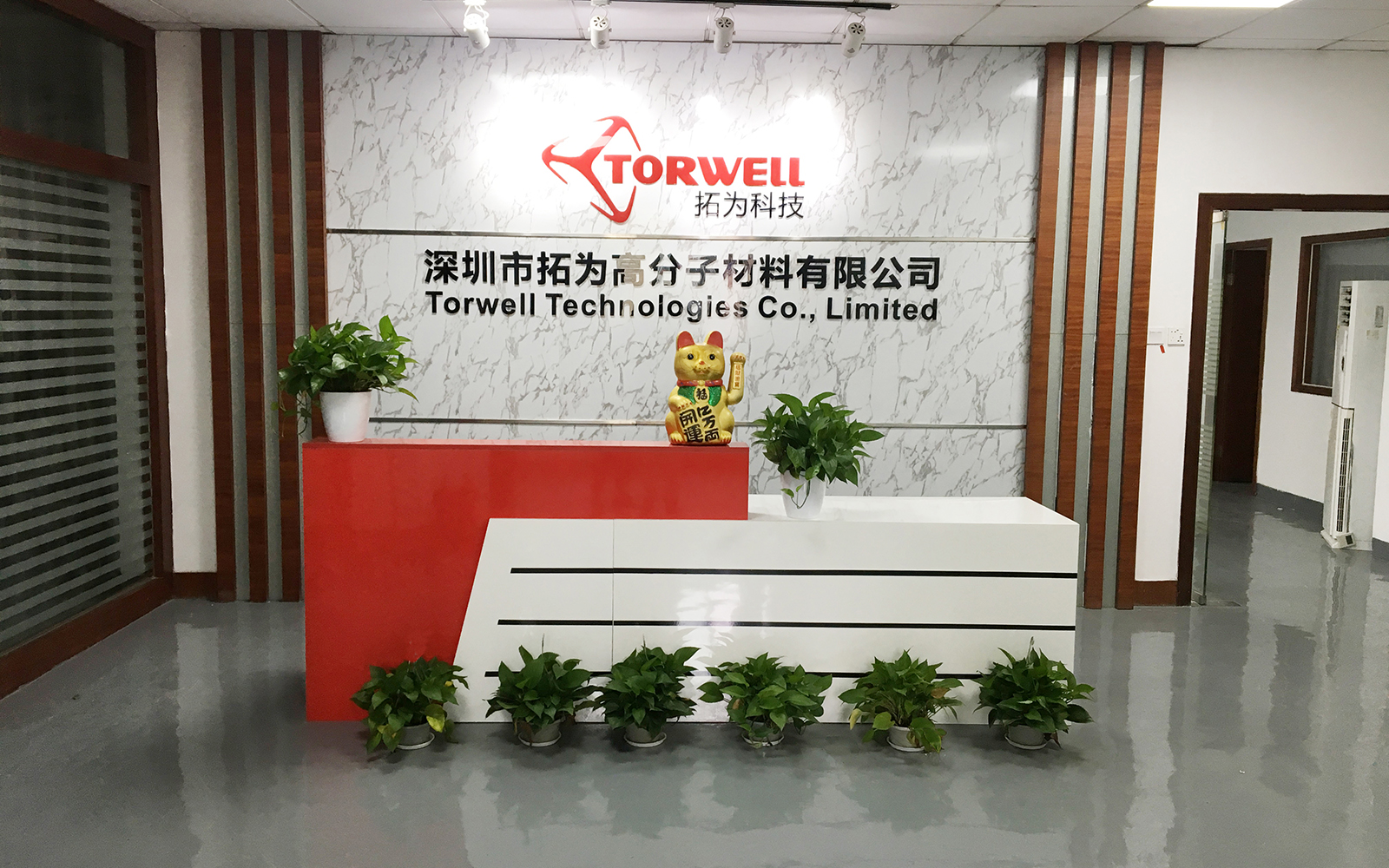
Company Profile
Founded in 2011, Torwell Technologies Co., Ltd. is one of the earliest high-tech enterprises which specializing in high – tech 3D printer filaments research, manufacture and sell, occupies 2,500 square meters modern factory with production capacity of 50,000kgs per month.
With more than 10years experiences in 3D printing market exploration, cooperated with Institute for High Technology and New Materials in domestic famous universities, and engaging Polymer materials experts as technical adviser, Torwell becomes one of member of Chinese rapid prototyping association and leader enterprise with the most innovative products in 3D printing industry, owns independent intellectual property rights, patents and trademarks(Torwell US, Torwell EU, NovaMaker US, NovaMaker EU).
Torwell passed international quality management system ISO9001, international environment system ISO14001, the advanced manufacturing equipment, test devices and virgin raw materials available are introduced to produce and distribute 3D printer filament of unparalleled quality, to insure all the products of Torwell are compliant with RoHS standard, MSDS, Reach, TUV and SGS test certificated.
Be a reliable and professional 3D printing partner, Torwell has committed to expanding its products to America, Canada, UK, Germany, Netherlands, France, Spain, Sweden, Italy, Russia, Mexico, Australia, New Zealand, Brazil, Argentina, Japan, South Korea, Vietnam, Thailand, Malaysia, India, more than 80 countries and regions.
Best Practices for Processing Industrial CF Filaments in Türkiye
To achieve peak mechanical strength and dimensional precision when 3D printing with carbon fiber reinforced materials in Turkish workshops and production environments, operators should observe several critical processing recommendations:
1. Wear-Resistant Extrusion Hardware
Chopped carbon fiber micro-strands are naturally abrasive. Standard brass nozzles can suffer significant bore expansion after printing as little as 250 grams of CF filament, leading to severe under-extrusion and dimensional inaccuracies. Users must equip their 3D printers with hardened tool steel, tungsten carbide, or ruby-tipped nozzles. In addition, hardened steel drive gears within the extruder assembly are vital to prevent premature tooth wear.
2. Active Moisture Management & Drying Protocols
Certain high-performance matrices—especially Polyamide (PA6-CF, PA12-CF)—exhibit significant hygroscopic properties. In coastal industrial areas such as Istanbul, Izmir, and Antalya, ambient humidity can quickly saturate exposed spools. Absorbed moisture vaporizes during extrusion at high temperatures (260°C – 300°C), creating micro-voids, severe stringing, and weakened layer lamination. Spools should be pre-dried in specialized filament ovens (typically 70°C – 80°C for 6–8 hours for PA-CF) and printed directly from active dry-boxes.
3. Bed Adhesion and Enclosed Chamber Thermal Stability
While carbon fibers significantly reduce thermal shrinkage, high-temperature composite baselines like PA-CF, ABS-CF, and PC-CF benefit greatly from passive or active heated enclosures. Maintaining an internal chamber temperature of 45°C to 70°C stabilizes layer fusion and relieves residual internal stresses. Textured PEI spring steel sheets or high-temperature engineering adhesives (e.g., PVP or specialized composite build sheets) ensure reliable first-layer bonding and effortless part release upon cooling.
CF Filament Sourcing & Technical Insights
Carbon fiber reinforcement enhances structural stiffness, boosts heat resistance (HDT), suppresses thermal warping on large print beds, and produces a sleek matte surface ideal for end-use industrial parts.
Yes. Torwell Technologies provides custom spool labeling, custom masterbatch coloration, specialized polymer blending, moisture-sealed vacuum packaging, and bulk B2B distribution for Turkish partners.
All Torwell products comply with ISO9001 and ISO14001 standards, and are fully certified under RoHS, REACH, MSDS, TUV, and SGS requirements for frictionless global and European trade compliance.
With a monthly manufacturing capacity of 50,000 kg, Torwell guarantees fast order dispatch via flexible air cargo for urgent prototyping or containerized ocean freight for wholesale distribution.
Comprehensive 3D Printing Filament Selection
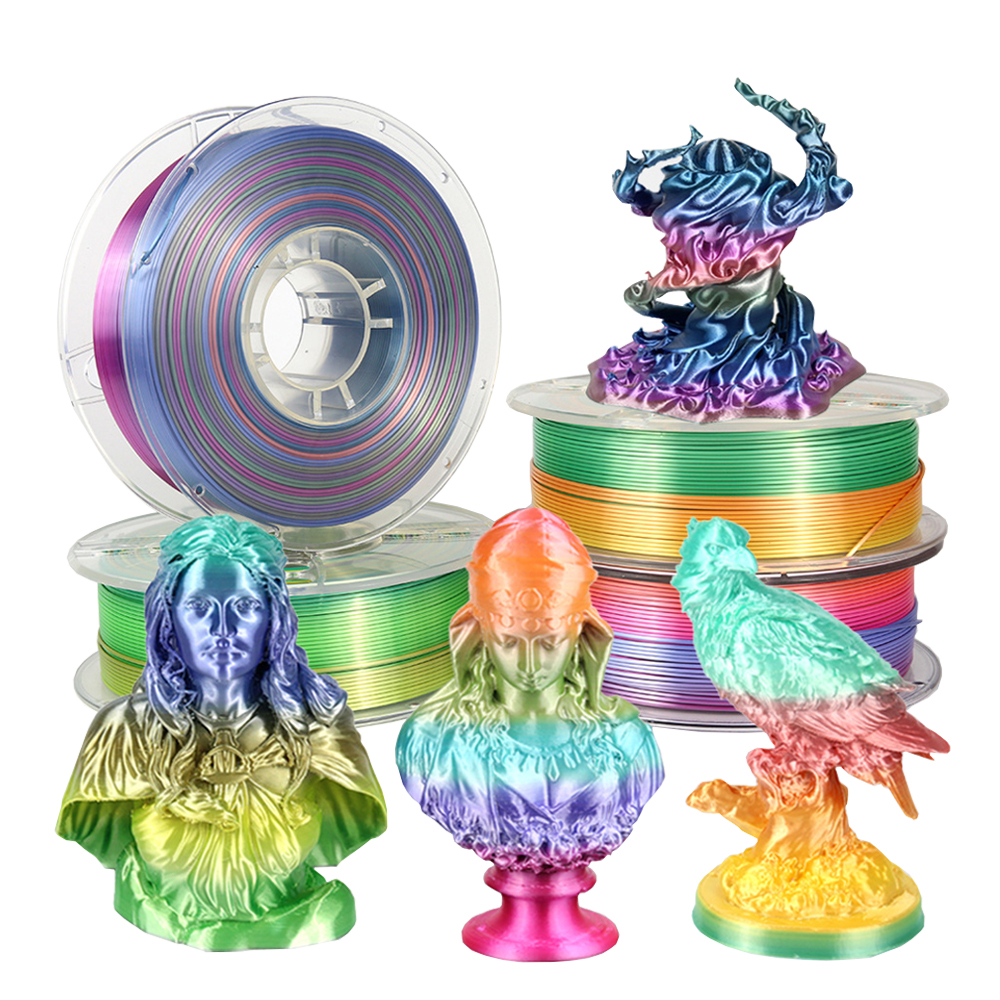
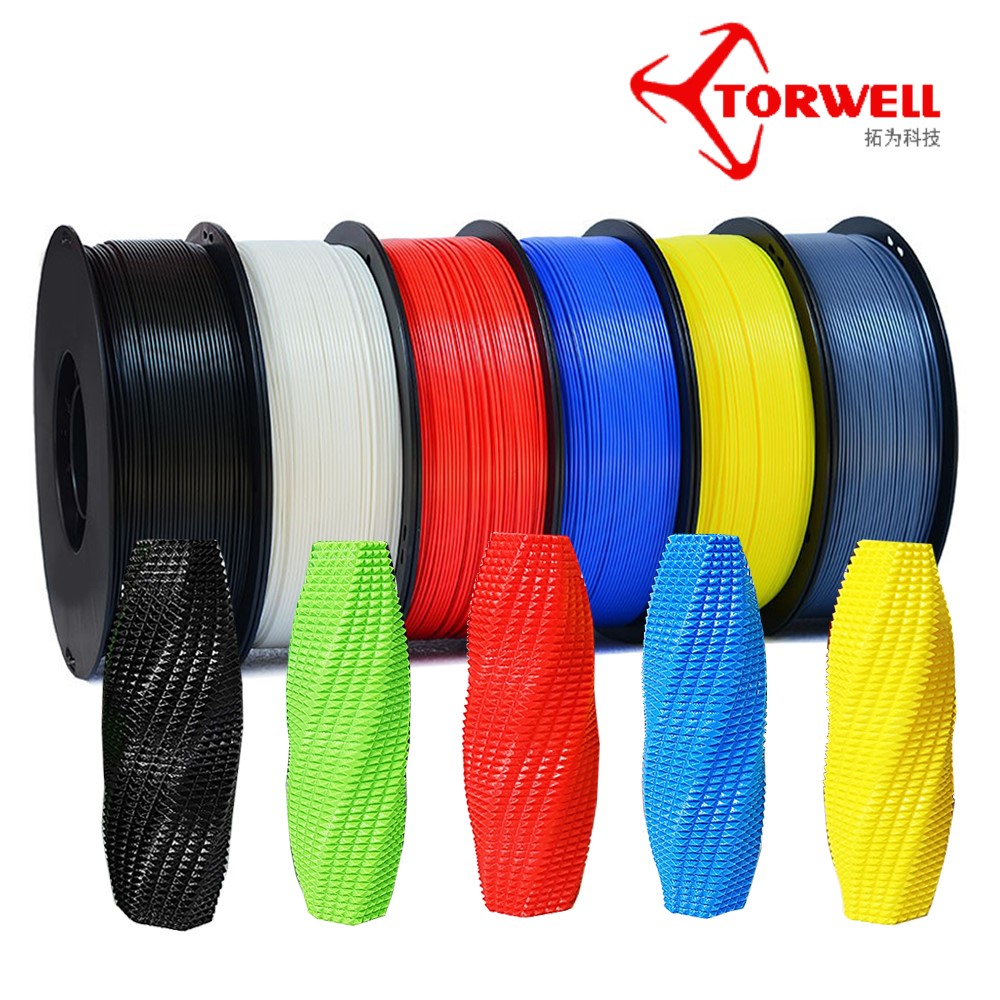
Explore our complete catalog of certified professional filaments, spanning standard prototyping plastics, silky aesthetic filaments, tough engineering grades, and flexible polymers.